




| ✅ Reviewed by Dr. Mark McCawley | 🕒 Reading time: four minutes |
If your gums appear to be pulling away from your teeth, you may have gum recession. This happens when gum tissue recedes and exposes more of the tooth or its root. Receding gums can affect one tooth or several teeth and may develop for different reasons. At McCawley Center for Laser Periodontics & Implants, we evaluate what is causing the recession and whether treatment is needed to protect the exposed roots and surrounding gum tissue.
What Causes Gums to Pull Away From Teeth?
Gum recession can develop gradually, and there is not always one single cause. Some people have naturally thin gum tissue, while others develop recession because of inflammation, brushing habits, or other factors.
Common causes include:
- Periodontal (gum) disease
- Brushing too aggressively
- Naturally thin gum tissue or genetic factors
- Smoking or tobacco use
- Certain tooth positions or orthodontic movement
- Trauma or irritation to the gum tissue
Because the cause can vary from one person to another, a periodontal evaluation can help determine why the gumline is changing and whether the recession is likely to progress.
Signs Your Gums Are Receding
Gum recession can develop gradually, so you may not notice the change right away. One of the first signs may be that a tooth looks longer than it used to or that more of the tooth is visible near the gumline.
Other signs can include:
- Visible tooth roots
- Sensitivity to hot, cold, or sweet foods
- A notch or change near the gumline
- Uneven gumlines
- Bleeding or swollen gums when gum disease is also present
Sensitivity can develop because an exposed tooth root does not have the same protective enamel covering as the crown of the tooth.
Are Receding Gums Always a Sign of Gum Disease?
No. Receding gums can occur with gum disease, but they can also develop for reasons unrelated to periodontal disease.
When periodontitis is the cause, infection and inflammation damage the tissues and bone that support the teeth. Recession may occur along with other signs of gum disease, such as bleeding, swelling, persistent bad breath, pus, or loose teeth.
Gum recession can also result from aggressive brushing, naturally thin gum tissue, tooth position, or trauma to the gums. A periodontal evaluation can determine what is causing the recession and whether gum disease is present.
What Happens if Gum Recession Is Left Untreated?
When the gumline recedes, exposed root surfaces become more vulnerable to decay and wear because they do not have the same protective enamel covering as the crowns of your teeth.
Recession can also continue to progress depending on its cause. If periodontal disease is responsible, ongoing inflammation can damage the tissues and bone that support the teeth. Treating the cause and monitoring the gumline can help reduce the risk of further damage.
Can Receding Gums Grow Back?
Once gum tissue has receded, it does not naturally grow back over the exposed portion of the tooth. This is why treating the cause of recession is important, especially if the gumline is continuing to change.
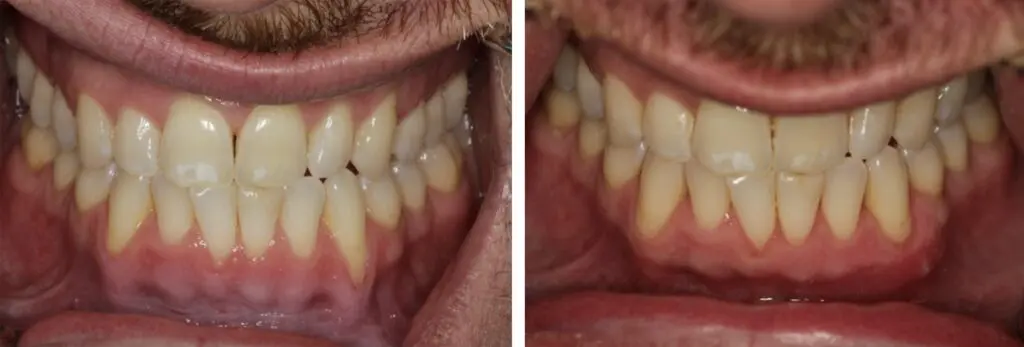
Although the tissue will not regrow on its own, procedures such as the Pinhole Surgical Technique can cover exposed roots by repositioning existing gum tissue or adding tissue where it is needed. This can protect the exposed root and create a thicker, more stable gumline.
Have Receding Gums Evaluated Early
Gums that pull away from your teeth may expose the roots and make them more vulnerable to sensitivity and decay. Because gum recession can have several causes, identifying why it is happening is the first step toward preventing additional tissue loss.
Dr. Mark McCawley can identify what is causing your gum recession and determine whether Pinhole Surgery or another treatment may help restore coverage over exposed roots.
To schedule an appointment at our periodontal office in Ft. Lauderdale, call (954) 807-4829 or visit us at 800 East Broward Blvd #706 Fort Lauderdale, FL.
FAQ
This is the ansGum recession can develop around one tooth when that area has less gum tissue or is exposed to more pressure or trauma than the surrounding teeth. For example, a tooth that sits farther forward in the jaw may have thinner gum and bone covering its root, making recession more likely. Brushing too aggressively in one area or localized gum disease can also cause recession around a single tooth.wer.
Any noticeable gum recession should be evaluated, even if it is mild or does not cause sensitivity. An evaluation can identify what is causing the gum tissue to recede and whether treatment is needed to prevent it from progressing. Bleeding, swelling, pus, or a loose tooth may indicate an additional problem such as gum disease and should be addressed promptly.
Gum recession by itself does not necessarily mean you will lose a tooth. However, severe recession or recession associated with advanced periodontal disease can occur along with loss of the tissues and bone that support the teeth.