



| ✅ Reviewed by Dr. Tom McCawley | 🕒 Reading time: four minutes |
An infection around a dental implant does not necessarily mean the implant has failed. Infection can begin in the gums around an otherwise stable implant, while implant failure means the implant can no longer remain stable or function successfully. The two problems can be related, however. An untreated infection can damage the bone supporting an implant and eventually contribute to implant failure.
Infection and Inflammation Around a Dental Implant
Inflammation around a dental implant can affect the gums alone or progress into the supporting bone. The two main forms are:
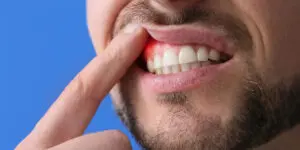
- Peri-implant mucositis causes inflammation in the soft tissue around an implant without bone loss. The gums may look red or swollen and bleed when cleaned or examined. When caught early, this condition can often be reversed with appropriate treatment and improved plaque control.
- Peri-implantitis is more advanced. Inflammation occurs along with progressive loss of the bone supporting the implant. Without treatment, continued bone loss can eventually threaten the implant’s stability.
Having peri-implantitis does not automatically mean an implant must be removed. The amount and pattern of bone loss, implant stability, and other clinical findings help determine whether treatment may be able to preserve it.
Signs of Infection Around a Dental Implant
An implant infection may develop without significant pain, so changes in the gums can be important warning signs.
Signs of peri-implant disease can include:
- Red or swollen gums around the implant
- Bleeding when brushing or cleaning around it
- Pus or drainage
- Increasing pocket depth around the implant
- Gum recession
- Bone loss visible on dental X-rays
Persistent changes around an implant should be evaluated even if the implant still feels secure. Detecting inflammation before extensive bone loss occurs can give us more options for controlling the disease.
How Implant Failure Differs From Infection
An implant infection affects the tissues surrounding a dental implant, but the implant itself may still be stable. Implant failure means the implant has not successfully integrated with the jawbone or has lost the bone support and stability it needs to remain functional.
The two can be connected. Peri-implantitis can cause progressive bone loss, and if enough supporting bone is lost, the implant may eventually become unstable and fail. However, an infected implant has not necessarily reached that point.
Implant failure can also occur for reasons unrelated to infection. An implant may fail to integrate during the initial healing period or develop other complications later.
Can an Infected Dental Implant Be Saved?
Yes, an infected dental implant can sometimes be saved, particularly when the implant remains stable and enough supporting bone is present. At McCawley Center for Laser Periodontics & Implants, preserving an infected implant whenever possible is an important part of our approach to treating peri-implantitis.
Our doctors have extensive experience treating infections around dental implants and have pioneered the use of LAPIP laser treatment for peri-implantitis. LAPIP targets bacteria and diseased tissue around the implant and can promote regeneration of the bone that supports the implant.
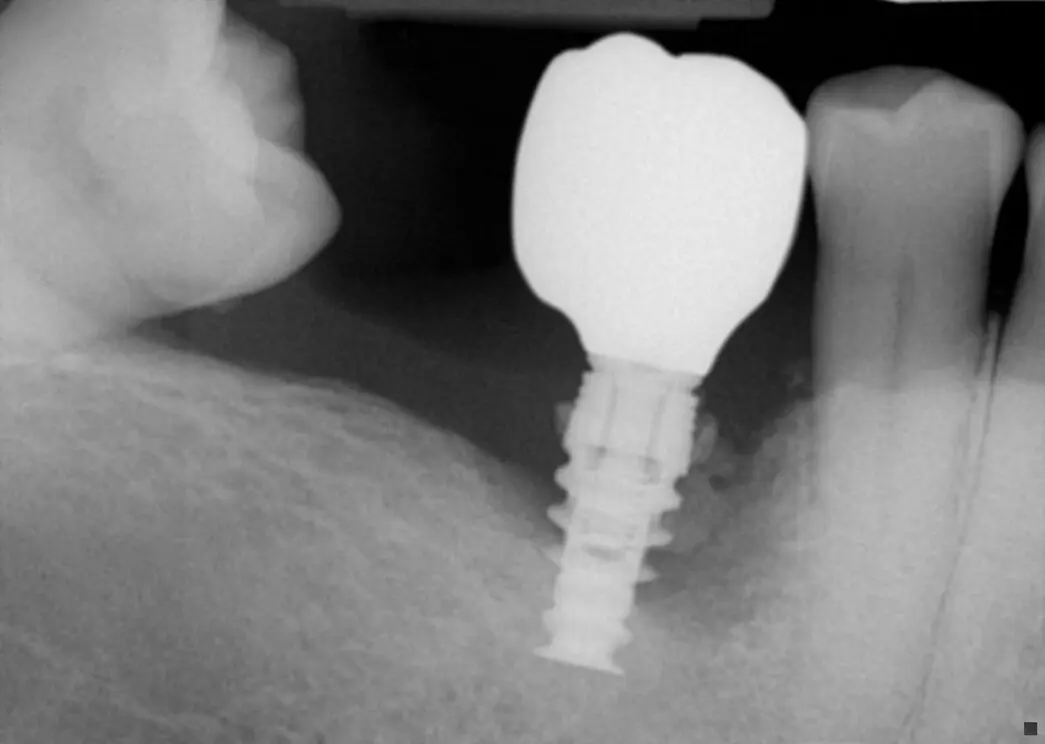
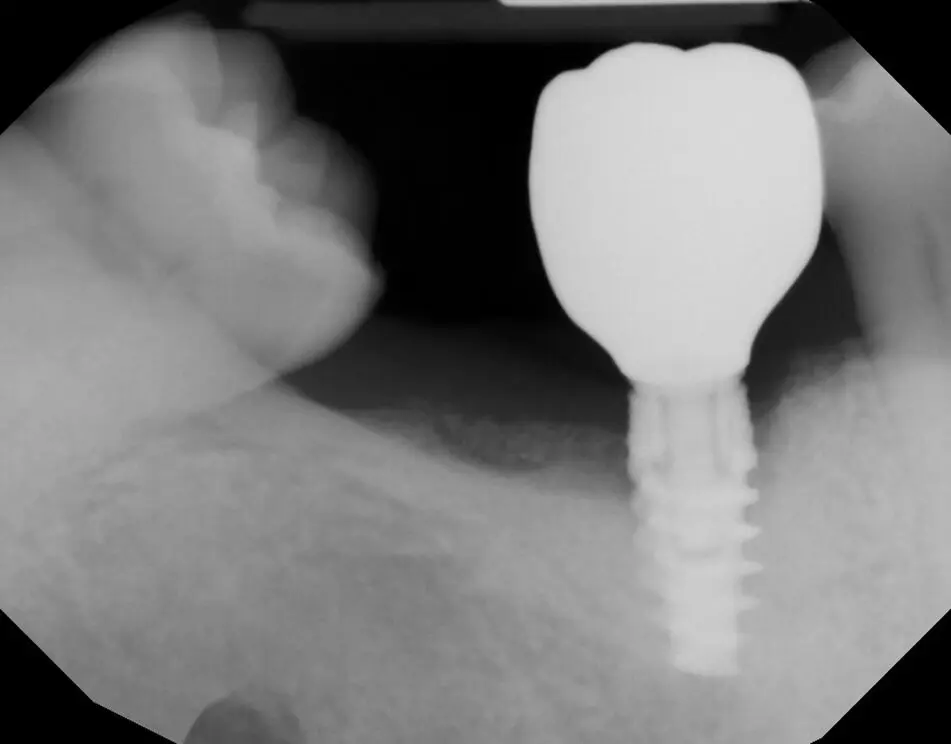
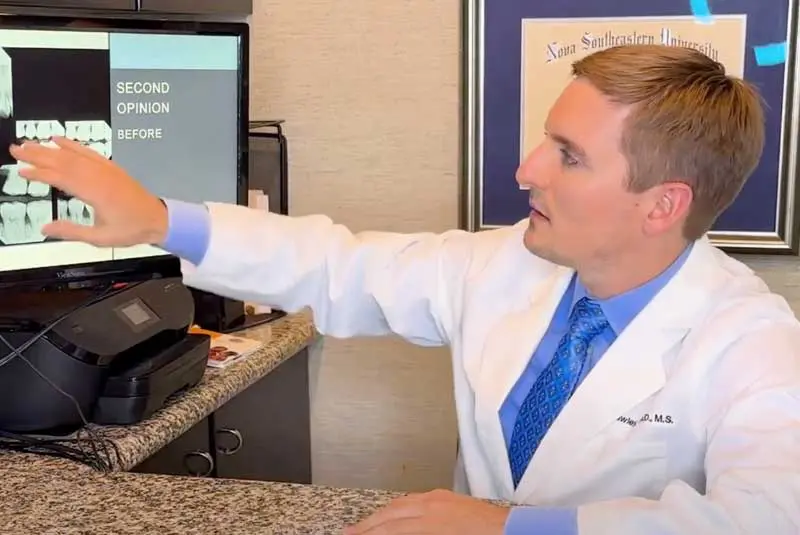
These X-rays were taken about nine months apart. Before treatment, the implant had more than 75% bone loss, significant calculus buildup, and an active infection. After LAPIP and bone grafting, the infection resolved and significant bone regeneration was achieved.
Treating the Infection to Preserve the Implant
We also take a microbiologically focused approach to infection. When appropriate, we can examine the microorganisms present around the implant and use antimicrobial therapy as part of a treatment plan designed to address the infection itself, rather than treating bone loss and inflammation alone.
Treatment depends on the severity of the infection, the amount of supporting bone remaining, and the stability of the implant. Our goal is to control the infection and preserve the implant whenever possible. In more advanced cases, bone grafting may also be considered. If an implant has lost too much supporting bone or can no longer be maintained successfully, removal may be necessary.
Protect Your Dental Implant With Ongoing Care
Dental implants still require regular cleaning and professional monitoring after they have healed. Plaque buildup around an implant can contribute to inflammation just as it does around natural teeth.
A history of gum disease, smoking, poorly controlled diabetes, and difficulty keeping the area free of plaque can increase the risk of peri-implant disease. Regular periodontal care also gives us the opportunity to identify changes around an implant before they become more difficult to treat.
Have a Problem Implant Evaluated Early
If you notice bleeding, swelling, pus, drainage, gum recession, or movement around a dental implant, we can determine what is causing the problem and whether the implant can be preserved.
To schedule an appointment at our periodontal office in Ft. Lauderdale, call (954) 807-4829 or visit us at 800 East Broward Blvd #706 Fort Lauderdale, FL.
FAQ
A failing dental implant may become loose or feel different when you bite or chew. In some cases, changes in the bone supporting the implant may be detected on X-rays before the implant becomes noticeably mobile. Bleeding, swelling, or gum recession can indicate infection around an implant, but these signs alone do not mean the implant has failed.
Antibiotics can help control certain bacterial infections around a dental implant, but they may not eliminate the infection on their own. Peri-implantitis can also involve infected tissue and bone loss around the implant, which may require treatment of the affected area in addition to antibiotics.
Infection around a dental implant is a recognized complication that can develop even after an implant has been in place for years. The risk varies based on factors such as oral hygiene, a history of gum disease, smoking, diabetes, and how well the implant can be kept clean.