


| ✅ Reviewed by Dr. Tom McCawley | 🕒 Reading time: four minutes |
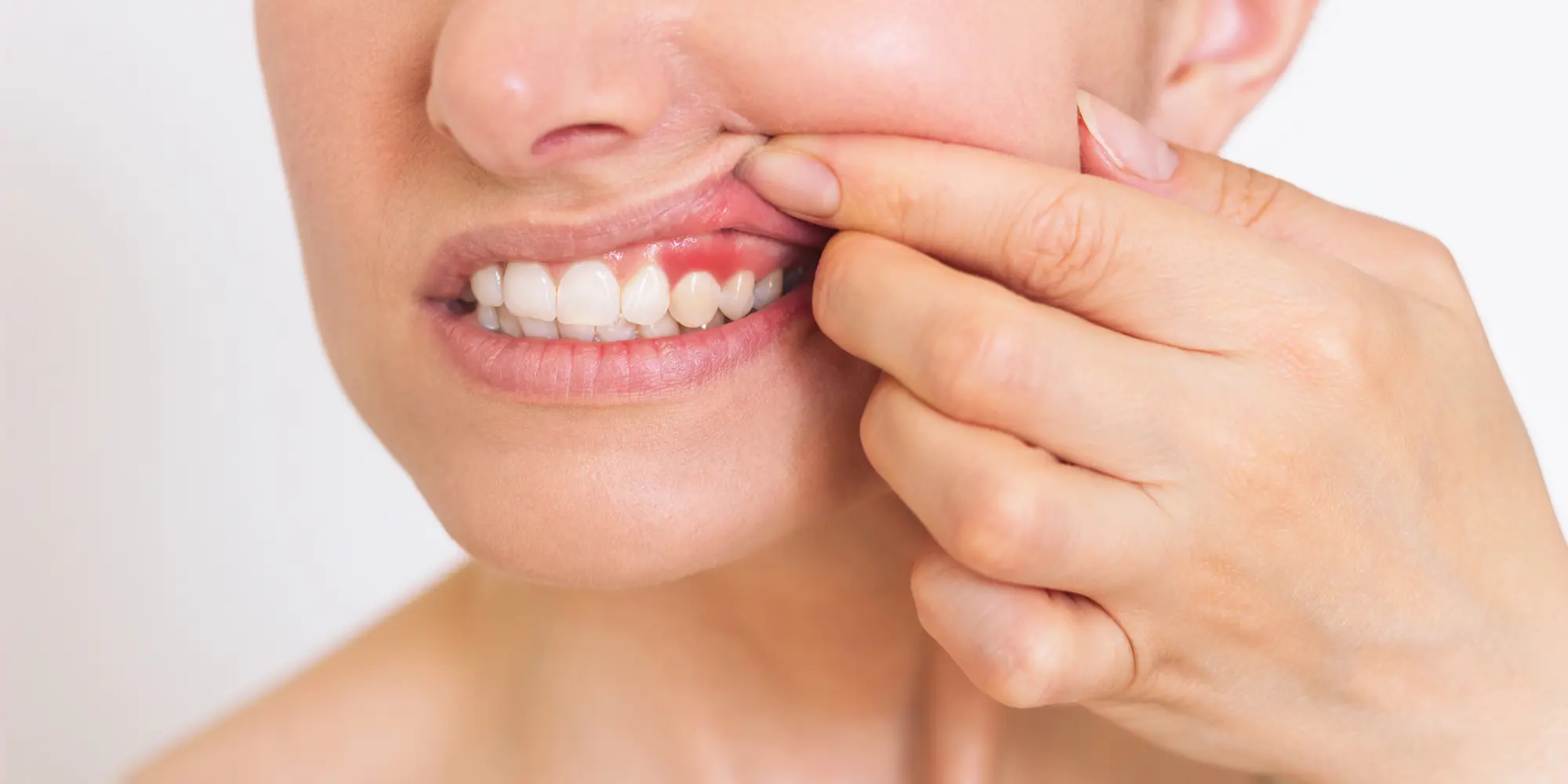
If your gum is swollen around one tooth, the cause could be something as simple as trapped food or irritation. However, localized swelling can also indicate gum disease or an infection around the tooth.
Common Causes of Swelling Around One Tooth
Swelling around a single tooth can develop for several reasons. Some causes involve temporary irritation, while others require professional dental treatment.
Food Trapped Between Your Teeth
Food particles, such as popcorn hulls, can become lodged between your teeth or beneath the gumline. This can irritate the surrounding tissue and cause swelling, redness, or tenderness.
Removing the trapped food may allow the inflammation to settle. However, swelling that persists or keeps returning could indicate an underlying problem.
Gingivitis or Periodontal Disease
Plaque and tartar buildup can cause inflammation around one tooth, especially in areas that are difficult to clean. Gingivitis may cause redness, swelling, and bleeding without damaging the bone supporting the tooth.
If the inflammation progresses to periodontitis, deeper pockets can develop between the teeth and gums. These pockets can collect bacteria and may eventually lead to infection and bone loss.
A Gum Abscess
A periodontal abscess is a localized infection that creates a pocket of pus in the tissues supporting a tooth. It often develops in people with existing gum disease when bacteria become trapped in a periodontal pocket.
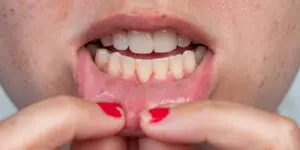
A gum abscess may appear as a swollen bump or pimple near the tooth. You might also experience pain when chewing, a bad taste, or pus draining from the area.
A suspected gum abscess needs prompt professional treatment, even if the swelling is not painful.
An Infected or Damaged Tooth
Sometimes, swelling that appears to come from the gums actually starts inside the tooth. Deep decay, cracks, or injuries can allow bacteria to reach the tooth’s inner tissues and cause an infection near the root.
This type of infection may require root canal treatment or another dental procedure to address its source.
Irritation Around a Wisdom Tooth
When a wisdom tooth only partially emerges, a flap of gum tissue may remain over part of the tooth. Food and bacteria can collect beneath this tissue, causing inflammation known as pericoronitis.
This condition commonly affects the back lower gums and may cause pain, swelling, or difficulty opening your mouth.
Signs That Swelling May Be an Infection
Not all swollen gums are infected, but certain symptoms suggest that the problem needs prompt attention.
Watch for:
- A painful or tender bump on the gum
- Pus draining from around the tooth
- Persistent throbbing pain or discomfort when chewing
- A bad taste or unpleasant breath
- A tooth that feels loose or unusually sensitive
- Swelling that becomes progressively worse
A gum infection does not always cause severe pain. Some abscesses drain on their own, temporarily relieving pressure while the infection remains.
How Is a Swollen Gum Around One Tooth Treated?
Treatment depends on whether the swelling comes from irritation, periodontal disease, or an infection inside the tooth.
Depending on the findings, treatment may include:
- Professional cleaning: Removing plaque, tartar, or trapped debris that is irritating the gums.
- Scaling and root planing: Cleaning below the gumline when periodontal disease is present.
- Abscess drainage: Draining a localized collection of pus when necessary.
- Antimicrobial therapy: Using targeted medications in selected cases where bacterial infection requires additional treatment.
- LANAP laser treatment: Treating certain cases of periodontitis by removing diseased tissue and reducing bacteria in periodontal pockets.
If the infection originates inside the tooth, root canal treatment or another restorative procedure may be necessary instead. Antibiotics are not needed for every dental infection and do not replace treatment of the underlying cause.
What Can You Do for a Swollen Gum at Home?
If you notice mild swelling, a few simple steps may help relieve irritation while you arrange an evaluation.
- Brush gently with a soft-bristled toothbrush.
- Carefully floss around the area to remove trapped food.
- Rinse with warm salt water to help soothe irritated tissue.
- Avoid chewing hard or sharp foods on the affected side.
- Do not squeeze, poke, or attempt to pop a swollen bump.
These measures may help with minor irritation, but they cannot cure a dental abscess or treat established periodontal disease.
When Should You See a Dentist?
If swelling does not improve after a day or two, keeps returning, or has no obvious cause, schedule a dental evaluation. Seek prompt dental care if you notice pus, significant pain, or a swollen bump that could indicate an abscess.
Seek emergency medical care if swelling is accompanied by difficulty breathing or swallowing, rapidly spreading facial or neck swelling, or other signs of a serious infection. Fever with dental swelling also warrants urgent evaluation.
FAQ
Can a gum be swollen around one tooth without pain?
Mild irritation, gingivitis, and even some periodontal infections can cause swelling without noticeable pain. The absence of pain does not necessarily mean the area is healthy.
Why is my gum swollen around a crown?
Swelling around a dental crown may result from plaque buildup, trapped food, irritation near the crown’s edge, or an underlying infection. If the swelling persists, a dental examination can help determine whether the problem involves the gums, crown, or tooth underneath.
Can flossing cause swelling around one tooth?
Flossing too aggressively can injure the gum tissue and cause temporary tenderness or swelling. However, if the gum repeatedly swells or bleeds when you floss, plaque buildup or gum disease may be contributing to the problem.
Can a swollen gum around one tooth go away on its own?
Swelling from minor irritation may resolve once the tissue heals. However, a gum abscess or infection inside the tooth will not reliably resolve without professional treatment, even if the swelling temporarily decreases.
Protect Your Gum Health With Specialized Periodontal Care
At McCawley Center for Laser Periodontics & Implants, we take a comprehensive approach to diagnosing and treating gum problems, including identifying the bacteria responsible for periodontal infections. Our goal is to address the underlying cause of your symptoms and help preserve your natural teeth.
If you’re experiencing swelling around one tooth, contact our Fort Lauderdale office to schedule an evaluation. To schedule an appointment, call (954) 807-4829 or visit us at 800 East Broward Blvd #706 Fort Lauderdale, FL.