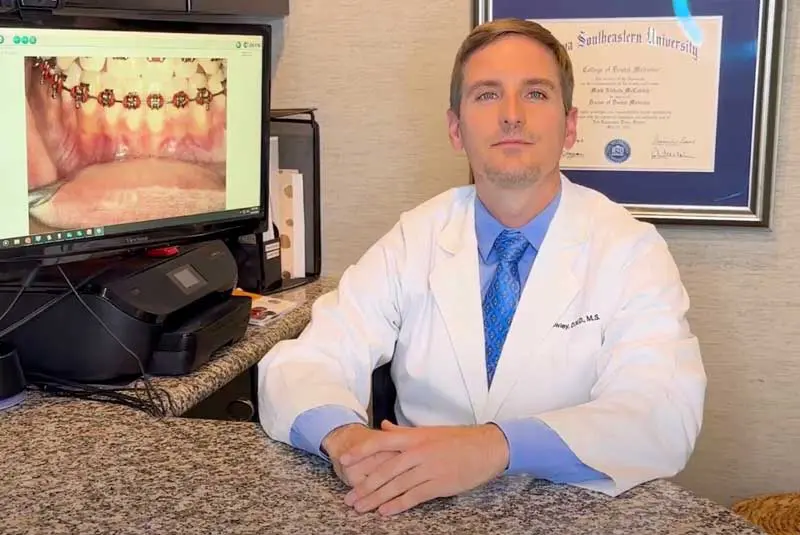





| ✅ Reviewed by Dr. Tom McCawley | 🕒 Reading time: three minutes |
A failing dental implant does not always require removal. In many cases, early treatment can control infection, stabilize the implant, and protect surrounding bone. The appropriate approach depends on implant stability, bone support, and the severity of inflammation.
How Is a Failing Dental Implant Treated?
Treatment depends on why the implant is failing and how much bone and tissue support remains. At the McCawley Center for Laser Periodontics and Dental Implants, we specialize in diagnosing and treating failing dental implants, with a strong focus on preservation whenever possible.
When infection or inflammation is identified early, treatment is often directed at stopping disease progression and stabilizing the implant. In more advanced cases, removal followed by site reconstruction may provide the most predictable long-term outcome.
A thorough periodontal evaluation allows us to determine whether implant preservation is appropriate or whether removal offers the best long-term result.
When Implant Preservation Is Possible
Dental implant preservation focuses on saving the existing implant by treating the surrounding tissues and bone. This approach makes sense when the implant is stable and bone loss has not compromised long-term function.
Laser Assisted Peri-Implantitis Procedure, known as LAPIP, is a minimally invasive laser-based treatment used to address peri-implantitis. The goal of LAPIP is to eliminate harmful bacteria and inflamed tissue while preserving healthy bone, soft tissue, and the existing implant when conditions allow.
LAPIP may be considered when:
- The implant remains stable and non-mobile
- Bone loss is present but not extremely advanced
- Infection is confined to the peri-implant tissues
- The implant surface remains structurally intact
When Dental Implant Removal Becomes Necessary
There are situations where an implant cannot be predictably stabilized, even with advanced laser and regenerative treatment. When infection continues to affect surrounding bone or the implant no longer has adequate structural support, keeping it in place can compromise long-term oral health.
Removal is considered when the implant shows clear signs that preservation is no longer reliable, including:
- Loss of stability or movement of the implant
- Progressive bone loss that weakens support
- Structural damage to the implant itself
- Persistent infection that does not respond to advanced treatment
In these cases, removing the implant allows us to control infection, protect remaining bone and tissue, and create a stable foundation for future restoration when appropriate.
Protect Your Investment and Your Smile
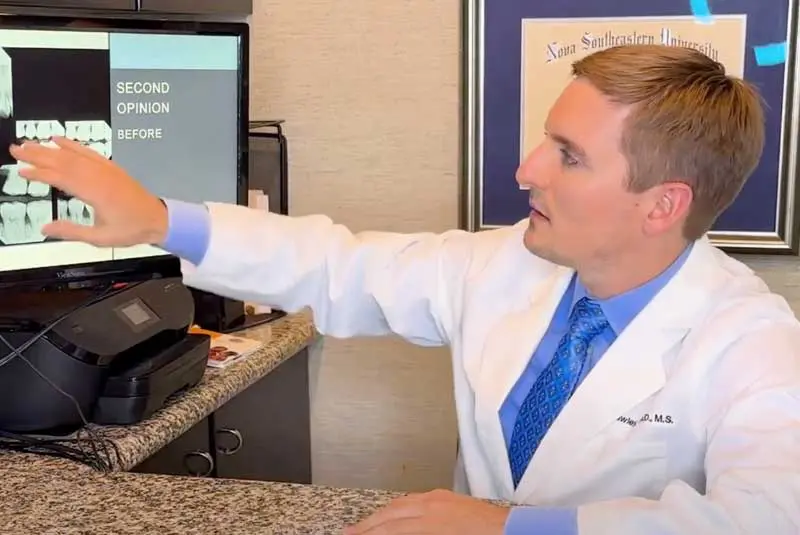
At McCawley Center for Laser Periodontics & Implants, our focus is saving teeth and dental implants whenever possible. If you have been told that your implant cannot be saved, this is exactly the type of case we evaluate every day, and we welcome second opinions to determine whether preservation is still possible.
To book an appointment at our periodontal office in Fort Lauderdale, FL, call (954) 807-4829 or visit us at 800 East Broward Blvd #706 Fort Lauderdale, FL.
FAQs
Dental implants most often fail due to infection in the surrounding tissues, known as peri-implantitis, which leads to bone loss over time. Other contributing factors may include untreated gum disease, insufficient bone support, or excessive forces placed on the implant.
The timing varies based on infection control and bone healing. In many cases, a healing period of several months is needed before a new implant can be placed.
LAPIP removes infected tissue and reduces inflammation around the implant, creating conditions that support the body’s natural bone healing process.
At the McCawley Center for Laser Periodontics and Dental Implants, LAPIP is performed by Dr. Mark McCawley and Dr. Tom McCawley, periodontists with extensive experience treating peri-implantitis and failing dental implants. To schedule an evaluation or request a second opinion, call (954) 807-4829.